Mines at Mostbet: 5x5 Grid, Multipliers, and Cash-Out Control
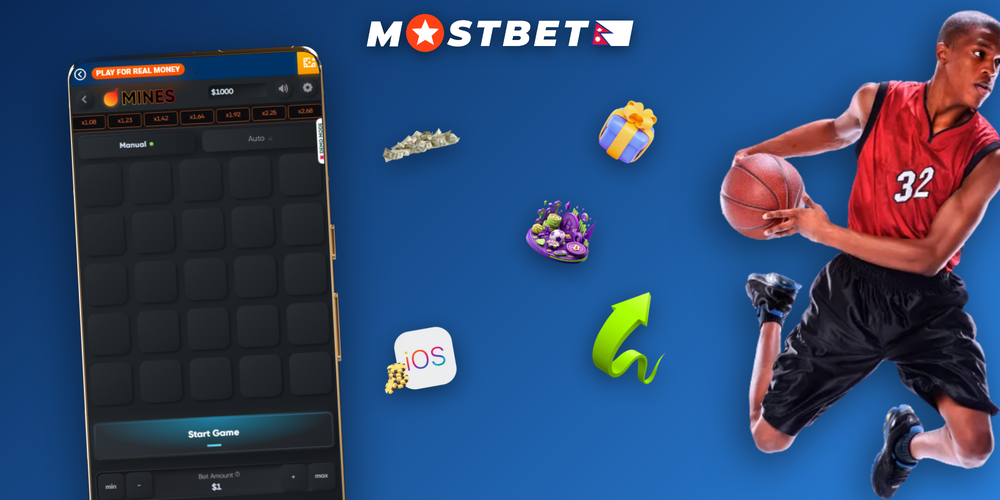
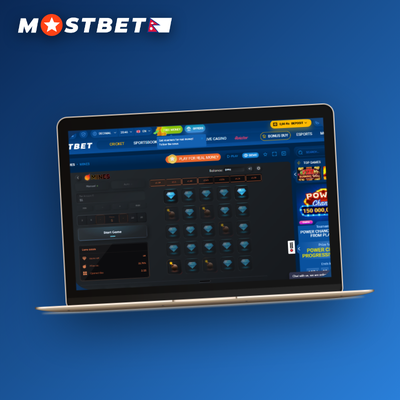
Mines at Mostbet puts you in control of every move on a 5x5 grid where each gem you reveal pushes the multiplier higher. Playing mines mostbet means choosing your own mine count, reading the risk, and cashing out on your terms before the grid turns against you. The game runs at 97% RTP and includes a free demo so you can learn the mechanic before staking real Nepalese rupees.
Understanding the Mines game at Mostbet
Mines at mostbet nepal puts you on a 5x5 grid where every round begins with your choice of how many mines to hide beneath the tiles. Reveal a gem and your multiplier climbs; hit a mine and the round ends. The game carries a 97% RTP and accepts bets from NPR 10, making mines mostbet one of the more accessible crash-style titles in the casino lobby. Cash out at any point to lock in your current multiplier before luck runs out.
1
Set your stake
Enter any amount from NPR 10 up to NPR 100,000 before the round begins.
2
Choose your mine count
Pick how many mines hide on the grid — more mines raise the multiplier but shrink safe tiles.
3
Reveal tiles one by one
Tap any tile to uncover it. Each gem you find pushes the multiplier higher.
4
Watch the multiplier grow
Every safe reveal increases your potential payout. The multiplier updates in real time.
5
Cash out or continue
Hit cash out to collect your winnings instantly, or keep flipping tiles for a bigger return.
Every round outcome is random — no tool, pattern, or mostbet aviator predictor logic can tell you where mines are hidden. The real skill lies in reading your live multiplier and deciding when to cash out. That decision is yours alone, and the system behind it is provably fair, which is exactly what the next section covers.
Play Mines Free or Go Live
Start with demo mode to learn the grid, then switch to a real bet whenever you feel ready.
How the provably fair engine verifies each round
Every round in Mines runs on a provably fair seed system, meaning the mine layout is determined before you reveal a single tile and can be verified once the round ends. Your client seed, the server seed, and a nonce combine to produce each outcome, so no one — including the platform — can alter where mines land after you place a bet. Pair this transparency with solid mostbet tips and you approach every session with a clear picture of how the game actually works.
How to verify a round
Server seed hash is displayed before the round begins — record it so you can verify later
You can replace the client seed at any time before placing a bet, giving you direct input into the outcome formula
The nonce starts at one and increments by one with every round, ensuring no two provably fair results share identical inputs
Once the round concludes, the full server seed is revealed so you can cross-reference it against the hash shown earlier
Run the server seed, client seed, and nonce through any standard SHA-256 checker to confirm the mine positions match the published result exactly
The provably fair system confirms that every outcome is determined by cryptographic inputs locked before you reveal a single tile — no tool, app, or pattern can predict where mines land because each round outcome is random by design. This transparency is a ceiling, not a floor: it tells you the game is honest, not that any approach removes the house edge. If you have questions about how verification works, support mostbet is available to walk you through the process. Understanding these limits is exactly what shapes realistic strategy.
Why seed verification matters to you
When you sit down for a round of Mines, you want to know the board was set before you clicked anything — not reshuffled the moment you hovered over a tile. The provably fair mechanism gives you exactly that assurance. Before each round begins, the server generates a server seed and hashes it, then combines it with your client seed and a nonce to produce the final mine layout. Because the hash is published before play starts, the casino cannot alter the outcome mid-round without the mismatch becoming visible to anyone who checks.
Verifying a completed round takes only a few minutes. Copy the server seed revealed after the round ends, run it through any standard SHA-256 tool, and compare the result against the hash you were shown before you started. If the values match, the mine positions were fixed from the outset — exactly as promised. This is not a theoretical feature; it is a concrete audit you can perform yourself after every session, from Kathmandu or anywhere else with an internet connection.
The practical takeaway is straightforward: the provably fair system removes the possibility of post-hoc manipulation, so the risk you carry in every round is the known mathematical risk of the game, nothing more. With that foundation of trust established, you can focus your attention on the decisions that are actually within your control — how many mines you set, how many tiles you reveal before cashing out, and how you manage your stake across sessions. Those are the variables where considered play makes a real difference, and the strategies ahead address each one directly.
Smart approaches for playing Mines
Three practical approaches shape how you play Mines, each suited to a different player goal. A low-mine conservative setup keeps risk level modest — fewer hidden mines mean safer tile reveals and steadier, smaller multiplier gains. A balanced 3-5 mine configuration pushes the multiplier higher with each safe pick, rewarding patience and composure. Whichever path you choose, bankroll management is what keeps you in the game across multiple rounds. Before committing real stakes, use demo mode to test each approach at no cost and find the style that fits you.
Practical tips by playing style
Start with 1-3 mines for a gentler climb — consecutive safe reveals stack multipliers without the sharp volatility of higher mine counts
Try a 3-5 mine setup when you want larger multiplier jumps per tile, accepting that each pick carries more risk
Set a firm session budget before you spin, and treat that ceiling as a hard stop regardless of how the round is going
Use demo mode (available for free on Mostbet) to test different mine counts and cash-out timing before committing real money
Enable autoplay only with a clear loss limit in place, so the feature does not accelerate spending beyond your plan
Avoid applying the Martingale strategy at high mine counts — doubling stakes after each loss multiplies exposure faster than the multiplier can compensate
Variance is real, and no approach to bankroll management changes the fact that each round outcome is random. Set a limit before you start, respect it when you hit it, and gamble responsibly. Once you have those boundaries in place, the how-to-play walkthrough below shows you exactly where to begin.
Balancing Risk and Reward
The mine count you choose at the start of each round is the single biggest lever controlling your experience. Set just 1 or 2 mines on the 5x5 grid and you get a high density of gems, which means consecutive safe reveals come easily — but the multiplier climbs slowly, so you need to uncover many tiles before the payout feels meaningful. That steady, low-variance path suits players who prefer to build a multiplier gradually and cash out after a longer run.
Flip to a higher risk level — say 10 or more mines — and the board becomes far more dangerous. Each tile you reveal has a much greater chance of hiding a mine, so rounds end quickly. The upside is that the multiplier jumps sharply with every safe reveal, reaching figures in a few clicks that would take dozens of tiles at the low-mine setting. The trade-off is brutal variance: one wrong tap ends the round with nothing.
A middle ground of 3 to 5 mines gives a balanced feel. The multiplier grows at a pace that rewards a few careful reveals without demanding an enormous number of safe tiles to reach an interesting payout. Whichever risk level you choose, the core discipline stays the same — decide your cash-out target before you start revealing tiles, not after the multiplier has already climbed and temptation sets in.
Playing your first Mines round step by step
Your first round of Mines takes just a few seconds to set up. Log in to your account, open the Mines game, and set your stake — anything from NPR 10 to NPR 100,000. Pick how many mines to hide on the grid, then start revealing tiles. Every gem you uncover pushes the multiplier higher. The moment you feel comfortable with what you've built, hit cash out and lock in your return before a mine ends the round.
Minimum bet
NPR 10
Maximum bet
NPR 100,000
RTP
97%
Maximum win multiplier
10000x
Demo mode
Yes
Auto play
Yes
Cash out
Available any time after the first gem
Before staking real NPR, try the game in demo mode — it costs nothing and lets you get comfortable with the tile-reveal mechanic and cash-out timing. Once you feel ready, the next step is choosing how many mines to place, which shapes every aspect of your risk.
Start Playing Mines from NPR 10
Pick your grid, set your mines count, and place your first real bet with as little as NPR 10.
How mine count shapes volatility and payouts
Every mine count you choose reshapes three things at once: tile probability, variance, and the multiplier scale. Fewer mines leave more safe tiles on the grid, so each reveal carries a higher chance of success — but the multiplier climbs slowly because the risk level is low. Pack in more mines and the odds of hitting one rise sharply, yet every safe reveal pushes the multiplier far higher. The table below maps this trade-off across common configurations.
Mine count vs. risk profile
Mine count
Risk level|First-tile safe probability|Multiplier growth pace
1 mine
Very low|96% (24 of 25 tiles safe)|Slow — many reveals needed to reach meaningful returns
3 mines
Low|88% (22 of 25 tiles safe)|Moderate — multiplier builds steadily across reveals
5 mines
Medium|80% (20 of 25 tiles safe)|Faster — binomial probability shifts noticeably each step
10 mines
High|60% (15 of 25 tiles safe)|Steep — each safe tile jumps the multiplier sharply
24 mines
Extreme|4% (1 of 25 tiles safe)|Instant peak — a single safe reveal can approach the 10000x maximum payout
The 10000x multiplier ceiling exists at the extreme end of the variance spectrum, where mine counts are high and every tile reveal carries serious bust risk. Reaching that figure demands a run most sessions will never see. In practice, players in Pokhara and beyond tend to find their rhythm somewhere in the middle range, where multiplier growth stays meaningful without the probability swinging sharply against them on each flip.
Risk profiles at a glance
Mostbet Mines — Steady Low Risk
Most tiles are safe, so multipliers rise in small steps — ideal for players who prefer frequent low-risk cash-outs.
Mostbet Mines — Balanced Strategy
Multipliers grow noticeably across several reveals, giving you a genuine decision point before each new tile.
Mostbet Mines — Aggressive Pace
Fewer safe tiles mean faster multiplier jumps, but rounds tend to end quickly once the board tightens.
Mostbet Mines — High Volatility Thrills
Even two or three successful reveals push the multiplier sharply upward, though early losses are common at this setting.
Mostbet Mines — Extreme Risk Ceiling
The only realistic path toward the 10000x ceiling, but the probability of hitting a mine on the very first reveal is extremely high.
Choosing a Mine Count That Matches Your Budget
Bankroll management is the practical side of setting your risk level before each round. A player in Kathmandu running a modest session can start at the minimum bet of NPR 10 and absorb a run of bad rounds without draining their balance — that breathing room makes it easier to experiment with higher mine counts, where multipliers scale quickly but the board clears fast. At the opposite end, a player staking closer to the NPR 100,000 maximum has far more to lose on a single detonation, so fewer mines and an early cash out tend to make more sense: the multiplier climbs slowly, but each additional reveal carries less catastrophic downside. The principle is straightforward — the larger your stake, the sooner it is worth locking in a profit rather than chasing a bigger multiplier. Conversely, when you are betting small, the cost of hitting a mine is contained, and you can afford to test aggressive mine counts over many rounds. Neither approach changes the underlying odds; each round outcome is random and no tool can predict where mines are placed. What bankroll discipline does is keep you in the game long enough to make deliberate decisions about when to cash out rather than reacting under pressure.
Mines at Mostbet: common questions
Can patterns predict where mines land in Mines?
No tool or pattern can predict mine placement. Each round outcome is random, and no external app changes that.
Are Mines calculators reliable?
Calculators can show probability estimates, but they cannot tell you which tiles are safe. Treat them as reference tools, not guarantees.
What is the maximum win in mines mostbet?
The Mines game carries a maximum win multiplier of 10000x, so a well-timed cash-out on a high-mine round can return a substantial amount.
Can I try Mines without real money?
Yes — demo mode is available, letting you explore the grid, test different mine counts, and get comfortable with the multiplier curve before wagering real funds.
What is the minimum bet, and is there a maximum?
The minimum bet is NPR 10 per round. The maximum bet is NPR 100,000, giving a wide range to suit both casual play and larger sessions.
Pick Your Stakes, Control Your Cashout
Start with NPR 10 in demo or real mode — set your mine count and walk away whenever you choose.